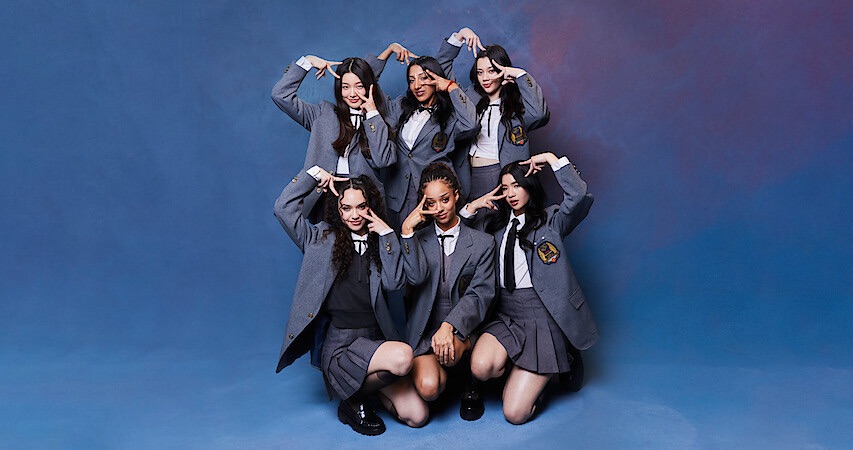
With the recent anniversary of the Netflix documentary ‘Pop Star Academy: KATSEYE’, and the announcement of the second girl group to come out of the series, it felt only appropriate to discuss the controversies the show faced.
What is ‘Dream Academy’?
Inspired by the global success of K-pop bands such as Black Pink and BTS, two of the biggest music corporation came together to create a global girl group that would dominate the US charts; these corporations would be HYBE and Geffen Records.
The concept for ‘Dream Academy’ was ambitious: 20 girls from diverse backgrounds were selected from thousands of applicants to undergo a two-year training and development (T&D) program. At the end of this process, only six would debut as part of the final group.
The girls endured intense training, constant evaluations, and end-of-month rankings. They were led to believe that their final debut would depend on performance, growth, and internal selection. But the truth was far more complicated, and far more exploitative.
Survival Show
One of the most troubling ethical concerns was how the show blindsided the trainees with the reality of a survival-show format.
Initially, contestants believed they had entered a structured training program – only to discover, partway through filming, that the process was in fact a globally broadcast elimination competition which was not disclosed at the beginning.
By the time the truth came out, the girls had already given up two years of their lives. Their vulnerability was then mined for entertainment.
Eliminations weren’t handled with compassion either through the use of an AI-generated bot announcing who was being sent home, rather than a human mentor offering feedback.
The betrayal was devastating for the trainees, some of whom had joined as young as 14.
Long-term bonds between the girls were suddenly weaponized for drama, creating tension and mistrust. One of the show’s early favorites, Lexie, even withdrew from the program entirely.
Overworked and Allegedly No Pay
Like the K-pop trainee system, the program operated on a model where contestants weren’t treated as employees. That meant no formal salary or financial safety net, sources assume.
The girls were provided housing, but reports suggest these costs were allegedly framed as debts to be repaid against any future earnings.
Contestants who didn’t make the final cut allegedly walked away with nothing – no pay for years of work, no support for re-entering their old lives, and in some cases, no stable housing.
In my opinion, this setup made the whole “opportunity” feel less like a chance at stardom and more like free labor under the guise of training.
Health Concerns
The physical toll of training was undeniable, yet the show rarely treated injuries with seriousness to give the girls a break. A few of the shown health issues:
- Lexie was shown undergoing surgery during the series. While it was later rumored that she struggled to return to her previous performance level, this was never explicitly confirmed.
- Emily, the highest rated dancer, suffered stress fractures from extensive injury and training.
- Manon, who needed time off for joint issues, was often ridiculed and judged heavily by her peers and trainers, despite having no knowledge of the extreme lengths the girls had to undergo to secure a spot.
Add to this the mental strain of constant evaluation and the negativity some of the girls faced from the public, and the picture is clear: well-being was secondary to spectacle.
Emotional Manipulation as Entertainment
One of the show’s most uncomfortable moments came when the contestants were asked to privately name who they thought deserved to debut. Believing it was confidential, they spoke honestly, only to have their answers broadcast back to the group.
What did this achieve, beyond humiliation and fractured trust? It was a tactic designed purely to create friction for entertainment purposes which aided in breaking down the solidarity of girls who had been living like family for years.
The message was clear: in the eyes of producers, their emotional safety was expendable.
KATSEYE Today
Since the chosen six (Manon, Megan, Lara, Sophia, Danielle, and Yoonchae) debuted, they have taken the music scene by storm.
From their recent performance at Lollapalooza, to the hit releases of ‘Gnarly’ and ‘Gabriella’, the public can’t get enough of the global girl group. Not to mention the many collaborations with brands such as Lush, GAP, Glossier and more.
The girls are at the forefront of new music and with their success, HYBE X Geffen have recently announced that 3 of the original ‘Dream Academy’ contestants are set to be in another global girl group.
Despite KATSEYE’s success, the main concern is the continued exploitation of young artists especially through the K-pop method, a system that continues to turn ambition into free labor, dreams into content, and children into collateral damage.
For a more comprehensive dive into the exploitation within ‘Dream Academy’ and more generally K-pop, watch Ashley Norton’s video essay here!

 The Signal Chain
Leave a comment